Vision 2030... Revisited
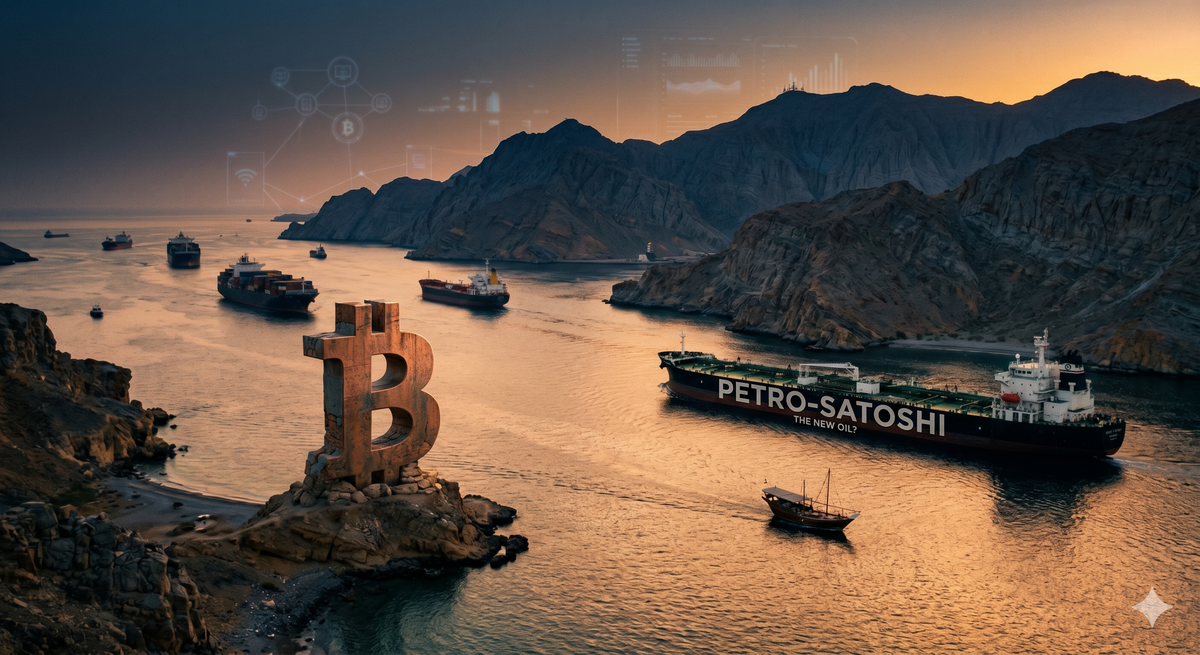
Saudi Arabia, The 8-Point Plan, and Bitcoin
In April 2023, I argued that Saudi Arabia should diversify a small portion of its sovereign reserves away from U.S. Treasuries and into Bitcoin.
The thesis was simple. The petrodollar system was breaking down, BRICS was building parallel financial rails, and the Kingdom’s strategic interests were drifting ever more toward Asia.
I argued it made little sense for Saudi Arabia to sell its finite resource, oil, for infinite dollars… and that trading its oil for something finite, Bitcoin, made far greater sense.
Three years on, almost every premise of that piece has hardened. The price of Bitcoin has nearly tripled. The purchasing power of the dollar has continued to deteriorate. But most surprisingly, the “protection racket” portion of the petrodollar agreement has failed.
Today, we’ll revisit how Saudi Arabia would’ve fared had it followed my advice. Then we’ll attempt to develop an economic and security framework for the region that is built on a neutral reserve currency.
Ultimately, it is argued that a hard shift toward the emerging Petro-Satoshi and Petro-Gold standards provides the best possible off-ramp for all parties involved in the current conflict. And that, at the end of the day, if sovereignty over one’s money is the ultimate goal, Bitcoin outshines gold.
Running the Numbers
In the original article, I proposed that the Saudis perform a modest reallocation. Sell ~10% of their then $120 billion in U.S. Treasuries and use the proceeds to buy Bitcoin.
At that time, Bitcoin’s price was give or take $28,000 per Bitcoin. The Kingdom would’ve bought anywhere from 450,000 to 500,000 BTC and would’ve found itself as one of the largest holders of Bitcoin on the planet.
And that 10% reallocation executed three years ago would be worth roughly $33 billion today… up more than 160%.
Now compare that to what actually happened to the $12 billion the Kingdom kept in Treasuries.
It earned approximately $1.4B in interest over 3 years. But after factoring in inflation of approximately 12% during that stretch, they’ve more or less come out flat on their position. Because $13.4B today has approximately the same purchasing power as $12B did in 2023.
But not all is lost. As a wise man once said… The best time to plant a tree was 20 years ago. The next best time to plant one is today.
It’s Still Early
The natural objection is that the trade is obvious now… Bitcoin is up 160% since that article, and the Saudis probably feel as if they’ve missed the trade...
Well, folks, welcome to Bitcoin. Almost everyone who has bought Bitcoin regrets not having bought it sooner.
So let’s dig into why it’s still early.
First, Bitcoin’s market capitalization today is roughly $1.5 trillion. For comparison, Gold’s market capitalization is roughly $26 trillion. If Bitcoin is to become a credible reserve asset alongside gold, and all indications are that it is… There is easily a 10-15x move in Bitcoin just to reach parity with Gold.
Second, Bitcoin is currently ~40% off its all-time high, trading at ~$76,000, down from $126,198 this past October. Who doesn’t like buying things at a 40% discount?
With roughly $1.15T in PIF assets, the Saudi’s could easily sell 4-5% of their existing assets and purchase ~500,000 Bitcoin today. This would make them one of the world's largest Bitcoin holders. (Behind Satoshi, BlackRock, Strategy, Coinbase, and Binance)
Finally, and arguably the most important reason, the strategic justification is far stronger today than it was in 2023. Then I argued that the Kingdom needed to hedge against the mounting global debt burden and rapid currency devaluations, and that it also needed to hedge against powerful nations seizing, freezing, and sanctioning other nations’ assets.
But what I didn’t anticipate in 2023… Is that the U.S. “protection racket” portion of the petrodollar system would fail… Leaving every nation under the U.S. security umbrella, scrambling to find an off-ramp for this war.
Calling a Spade a Spade
The U.S. couldn’t uphold its promise to defend its Gulf allies.
According to Bloomberg, “Dozens of refineries, oil fields, gas plants, ports, and other energy infrastructure have been damaged by Iranian missile and drone strikes” over the past couple of months. Furthermore, numerous U.S. military bases and much of its key infrastructure in the region have been decimated.
With asymmetric drone/missile warfare, Iran has leveled the playing field in the region, and the Gulf States are on the verge of being defenseless.
All sides know that mutually assured destruction is still on the table. Without energy infrastructure and desalinated water, the Gulf nations, Israel, and Iran all go back to the Dark Ages.
As Sheikh Rashid bin Saeed Al Maktoum of Dubai once said…
"My grandfather rode a camel, my father rode a camel, I drive a Mercedes, my son drives a Land Rover, and my grandson is going to drive a Land Rover, but my great-grandson is going to have to ride a camel again."
As someone who spent 5 incredible years in the region and grew to love the people, culture, and traditions, my hope is that Sheik Rashid is proven wrong… But for that to be the case, an agreement needs to be reached.
The Post-War Framework
First and foremost, a new balance of power in the Middle East needs to be struck. As the largest recipient of oil flows from the region and as the only neutral party with a genuine desire for all factions to succeed, China will likely play a crucial role in shaping the post-war environment.
The 8-Point Plan
- The Hormuz Strait becomes a multilateral transit zone under a Gulf Maritime Authority. Members of the Authority to include Iran, Saudi Arabia, the UAE, Iraq, Oman, Qatar, Kuwait, and Bahrain. Non-Voting/Observer members to include Pakistan, China, and Turkey.
- A regional reconstruction fund is established to repair war damage in Iran, Lebanon, Iraq, Saudi Arabia, the UAE, Qatar, Kuwait, and Bahrain. The fund will be capitalized via a newly established “Hormuz toll,” enforced by the Gulf Maritime Authority. The toll would be paid in Gold or Bitcoin.
- Every barrel of oil from the Gulf is priced in a neutral reserve asset. Gold or Bitcoin.
- Iran retains civilian enrichment under enhanced IAEA monitoring; Its weapons-grade work is permanently abandoned.
- Phased proxy demobilization and the creation of a regional integration pathway. This includes U.S./Israel/Arab proxy groups as well as Iranian proxy groups.
- Sanctions Relief. The United States and the EU lift all economic sanctions on Iran and, furthermore, release its roughly $100 billion in frozen overseas assets.
- A multilateral non-aggression and security framework for the Region.The United States, Iran, and the GCC states sign a regional non-aggression pact prohibiting first-strike military action by any signatory against any other. The pact is co-guaranteed by China, Russia, Pakistan, and Turkey, with the U.N. Security Council formally registering the agreement.
- U.S. military/naval presence is restricted to the Eastern Mediterranean Sea.
Why It Works
Today, every oil transaction placed in dollars passes through correspondent banks under U.S. jurisdiction. These assets are then subject to OFAC sanctions and SWIFT exclusion and are at risk of being seized/frozen. Therefore, settling the oil trade in a neutral reserve currency will go a long way toward depoliticizing the chokepoint.
It means that, going forward, an oil sale from Saudi Arabia to China or from the UAE to India can be completed without the U.S. or any other G7 government holding a veto over the transaction.
Next, the Hormuz toll would allow the affected countries to rapidly rebuild their damaged infrastructure. Tolls as chokepoints are not uncommon (Suez, Panama, etc.), but the arrangement would likely be the most hotly contested component of the 8 Point Plan. The greater the sanctions relief for Iran, the more likely it is that they will agree to share toll revenues with their Gulf neighbors.
Removing the U.S. military presence from the region allows the Chinese to strike a diplomatic balance and fill the power vacuum. Remember, China has a lot of skin in the game. And it was the Chinese that negotiated the détente between Iran and Saudi Arabia back in 2023. And it will be the Chinese who once again convince the region to put down their arms and start making money.
Now, let’s look at the hard money standards displacing the petrodollar. And how the Chinese preferred system falls short.
Petro-Satoshi / Petro-Gold
Beijing has been developing a gold-backed alternative to the dollar system for over a decade, rapidly decreasing its U.S. Treasury holdings from roughly 59% of its foreign assets in 2016 to about 25% now.
Furthermore, the Shanghai International Energy Exchange has been offering yuan-denominated crude oil futures since 2018, with a clear option for physical gold conversion through the Shanghai Gold Exchange. This setup, known as the “petro-yuan-gold” model, allows a foreign producer to sell oil for yuan and instantly convert those yuan into physical gold deliverable in Shanghai or at any of its offshore vaults. (Saudi Arabia, UAE, Singapore, Switzerland, Malaysia, etc.)
China loves gold because it is the easiest hard money to control.
A Chinese citizen with $100,000 worth of gold needs government permission to convert it and send it abroad. A Chinese citizen with $100,000 in Bitcoin needs only a memorized seed phrase and an internet connection. For this reason, the CCP has banned its citizens from owning Bitcoin.
The physical movement/settlement of gold can be granted or rejected by the Chinese central authority, and physical gold is also far easier for the central authority to seize.
Just as the U.S. Treasury has seized, sanctioned, and frozen assets of its adversaries. The Chinese will be able to seize, sanction, and freeze any gold in Shanghai exchange vaults.
And it is for that reason, Sovereignty over one’s money, that Bitcoin and the Petro-Satoshi ultimately win… because with Bitcoin, a nation can hold its own asset within its own infrastructure, on its own soil, with its own cryptographic keys, and not be reliant on or live in fear of foreign nations/custodians.
Vision 2030 calls for the Kingdom to be an "ambitious nation." But ambition without monetary sovereignty is just permission.
Until Next Time ✌️